SLAM and structures
How SLAM can produce reliable structures' 3D data
Paolo Corradeghini
2/13/20262 min read


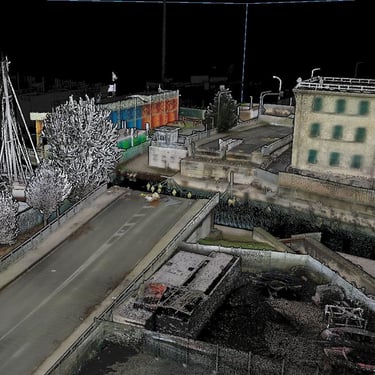
A SLAM system can give you 3D information of a structure that you can use for specific analyses and assessments.
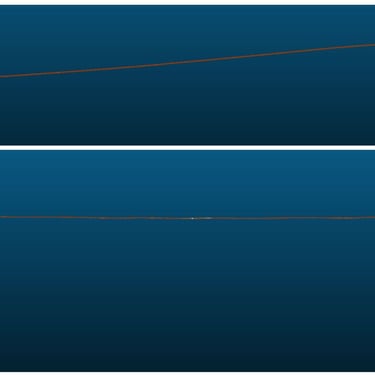
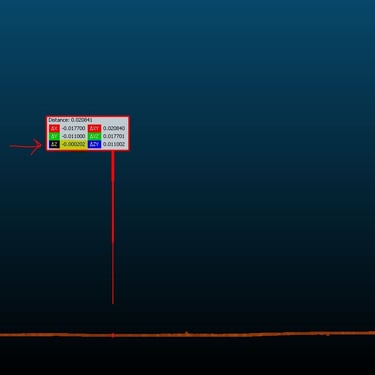
You won’t get millimetre-level precision, but you can still achieve solid and reliable geometry.
There are a few things worth doing if you want the best possible result:
Use high-end hardware to get the best quality raw data in the field.
Choose solutions based on reliable, proven, and high-performing SLAM reconstruction algorithms.
To manage drift, plan a looped acquisition: start and end in the same spot. Inside that loop, add “mini-loops” by revisiting known areas.
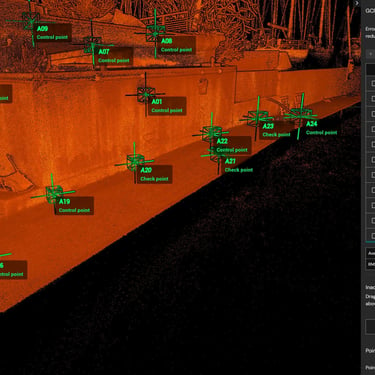
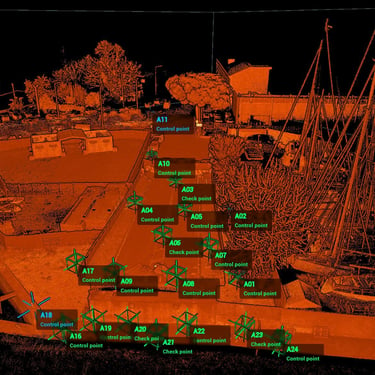
Use control and check points, ideally measured with a total station, evenly distributed across the survey area. Bring them into the processing software during data processing (not at the end just for a simple rigid transformation of the final point cloud).
Carry the SLAM by hand (don’t mount it on a backpack) and orient the head so the laser hits the surfaces you want to capture while reducing incidence angles. But don’t get too close to what you want to model, or you may end up with poor data after processing.
Walk slowly: don’t rush, and make wide, smooth turns.
Pay attention to cleaning filters applied to the point cloud (outliers, noise, moving objects, close-range points): some software can remove a bit too much. It’s often better to keep them disabled at first, then apply them carefully and tweak the settings.
Don’t obsess over point cloud colourisation: the important part is the geometry.
Some SLAM solutions currently on the market aren’t ideal for this kind of work. Others can help you reach results that meet your goals.
Is it the same as using a static laser scanner?
Probably not.
But if the environment is complex and the output is good enough for whoever needs to work with that information, the time saved in the field can be very significant.
I used an Emesent SLAM (Hovermap ST). It’s been around for a few years, but thanks to firmware and processing-software updates it’s still performing well. (I’m curious to see what the new product will be that’s about to be released!)